
No products in the cart.
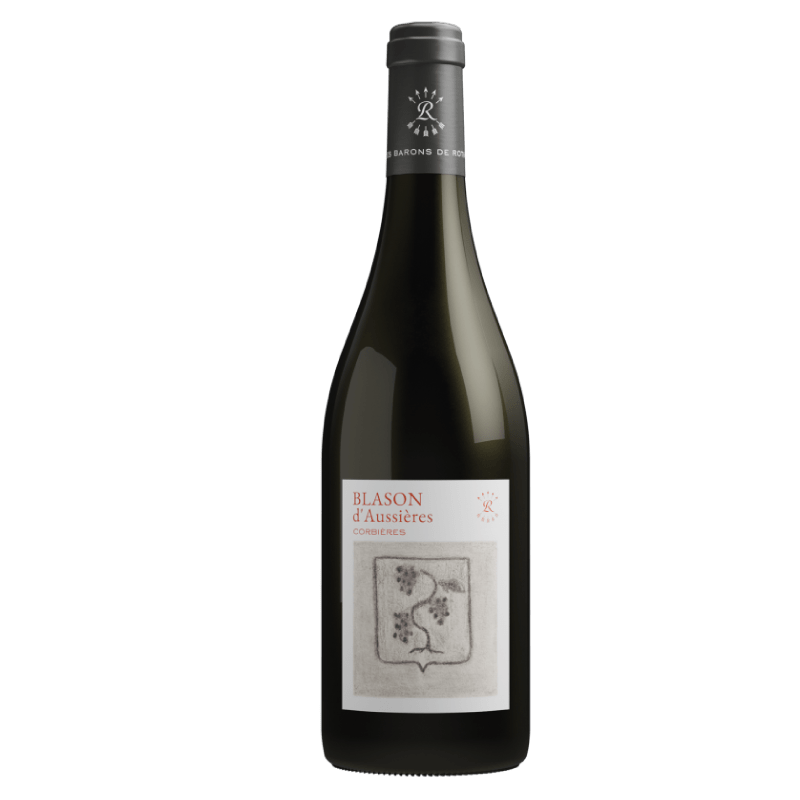
Domaine D’ Aussières Blason D’ Aussières

RM139.90
| Alcohol | 14.5% |
|---|---|
| Country | Argentina Mendoza |
| Closure Type | Cork Cap |
| Volume | 750ML |
| Winemaking | Philippe Rolet |
| Grape Variety | 36% Syrah, 35% Grenache Noir, 12% Mourvèdre, 9% Carignan, 8% Alicante-henri-bouschet |
TASTING NOTES:
A very pure, sunny bouquet, with notes of flint and graphite. These are mingled with the very specific scents of garrigue (thyme, black truffle) and some liquorice and eucalyptus.
On the palate, there is the same mineral character and notes of the garrigue but on a slightly different register (mentholated vervain, sage, laurel). Secondary notes of blackcurrant and blueberry compote and a hint of fruit brandy emerge, a sign of the beginning of a very harmonious evolution. The tannins are well-integrated, giving the wine a perfectly balanced structure.
In stock
BACKGROUND
Due to its exceptional geographical location and unique wine-growing site and history, Domaine d’Aussières is one of those wild, natural places that gives an impression of great force and beauty. These words of Baron Eric de Rothschild explain why he fell in love with the estate and Domaines Barons de Rothschild (Lafite) has taken on the challenge to revitalize one of the oldest and most beautiful wine-making estates in the Narbonne area. Now his daughter Saskia continues the work her father began. Acquired by Domaines Barons de Rothschild (Lafite) in 1999, the 1,359 acre Domaine d’Aussières estate has undergone a vast rehabilitation program. 412 acres of vines have been replanted with carefully selected traditional Languedoc grape varieties: Syrah, Grenache, Mourvèdre and Carignan, complemented with Cabernet, Merlot and Chardonnay.
TERROIR & VINTAGE NOTES
The estate is nestled in the rugged hills just behind the Mediterranean coastline of Narbonne, in the South of France.
In the Languedoc, after a mild winter and a cool spring, temperatures rose, reaching a peak throughout the region at the end of June; this was followed by a hot summer. Fortunately, Aussières escaped the drought and the heatwave thanks to its ally the wind – in particular from the south-east: the “Marin” which brings just the right amount of moisture for the vines’ growth. Finally, some rain at the beginning of September enabled the grapes to reach the desired levels of ripeness. The Carignan, Mourvèdre and Grenache benefited the most from these conditions and in this vintage reveal superb freshness and aromatic intensity.
WINEMAKING
Blason d’Aussières is made according to the traditionnal method. Alcoholic fermentation takes place in temperature-controlled stainless steel and concrete tanks. The Carignan partially undergo carbonic maceration, contributing to its distinctive style. During fermentation regular pump over allow a gentle extraction of the tannins and phenolic compounds. Once the fermentation is completed, the wine is left untouched for a couple of days. Total maceration time stretches 15-20 days.
| Weight | 2 kg |
|---|
Brand
Domaine D’aussières
Los Vascos (DBR)
Be the first to review “Domaine D’ Aussières Blason D’ Aussières”
Related products

RM175.00

Out of stock
RM150.00

Out of stock
-15%

Original price was: RM117.00.RM99.00Current price is: RM99.00.
Save: RM18.00
-5%

Original price was: RM388.00.RM369.00Current price is: RM369.00.
Save: RM19.00
-16%


Out of stock
Original price was: RM220.00.RM185.00Current price is: RM185.00.
Save: RM35.00
-9%


Out of stock
Price range: RM228.00 through RM1,250.00

RM128.00

Reviews
There are no reviews yet.